Florida living is a dream. Warm weather, backyard pools, and sunshine almost every day of the year. But Florida also comes with mosquitoes the size of small birds, relentless UV rays, sudden afternoon thunderstorms, and enough humidity to make you feel like you’re swimming through the air.
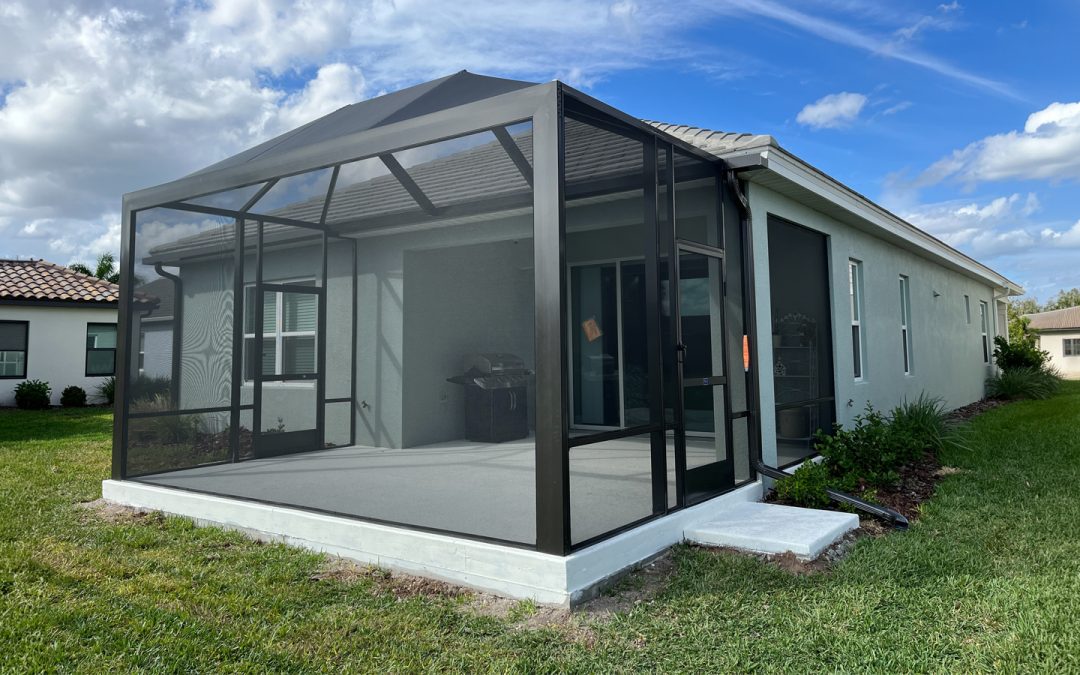
That’s exactly why screen enclosures are one of the smartest investments a Florida homeowner can make. The right enclosure turns your outdoor space into a comfortable, protected area you can actually enjoy all year long. But with so many options out there, how do you choose the right one? This guide breaks it all down for you.
Key Takeaways
- Measure your space carefully and plan for future use before building.
- Aluminum is ideal for Florida weather, but the frame gauge determines long-term durability.
- Screen mesh type affects sun, airflow, and bug protection.
- Hurricane ratings are essential in Florida; always verify that the enclosure meets local wind-load codes.
- Permits are required in most Florida counties. Never skip this step.
Before the Design, Decide the Size
Many homeowners build too small and regret it, while others build too big and overspend. Measure your patio or lanai and leave 3 to 4 feet of clearance around the outdoor space for easy movement. Plan the space based on how you will use it. For gatherings, leave room for a grill, dining table, and lounge chairs. For a quiet retreat, a smaller enclosure can be enough.
Also, think ahead. Planning to add a hot tub or outdoor kitchen someday? Build a little bigger now because it is far cheaper than tearing down and rebuilding later. Always check your HOA rules and county setback requirements before finalizing any plans.
A good rule of thumb: when in doubt, go slightly larger. Outdoor spaces almost always feel smaller once furniture is added.
The Frame Makes or Breaks It
The frame material you choose is critical in Florida’s brutal climate.
Aluminum is the go-to choice for Florida homeowners, and for good reason. It does not rust, holds up against humidity and salt air, and is both lightweight and strong. Look for thicker-gauge aluminum, such as 6063 T5 or 6005 T5, which better withstands wind loads during hurricane season. A powder-coated finish adds protection against UV exposure and oxidation. White and bronze are the most common color options in many Florida neighborhoods.
Some homeowners consider wood or vinyl for a more decorative look, but both struggle in Florida’s heat and humidity. Wood warps and rots. Vinyl becomes brittle under heavy UV exposure. Aluminum lasts longer, so stick with it.
Not All Screens Are Created Equal
This is where many people get tripped up, and it matters just as much as the frame.
Standard fiberglass mesh is the most affordable option. It offers great airflow and keeps bugs out, making it a solid choice for patios that don’t get direct sun all day.
Super Screen, made from high-density polyester, is a heavy-duty upgrade. It is tear-resistant, filters more UV rays, and lasts 10 to 15 years or longer. It costs more upfront but saves you on replacements down the road.
A solar or privacy screen blocks 80 to 90 percent of sunlight, reducing heat inside the enclosure. It is ideal if your patio gets intense afternoon sun. The tradeoff is reduced airflow and a slightly obstructed view.
No-see-um screen has a tighter weave to block tiny insects like sand gnats. If you live near the coast or in wooded areas, this option makes a big difference. Just know that it reduces airflow more than standard screens do.
Florida Weather Waits for No One: Ratings and Permits Matter
Florida screen enclosures must meet local wind load requirements. Many counties require structures rated for 130 to 150 mph winds or higher. Always ask your contractor whether the design meets Florida Building Code requirements and whether it is engineered and stamped by a licensed Florida engineer.
On permits: In Florida, you almost always need a building permit to install a screen enclosure. A reputable contractor will handle permits. If someone offers to skip the permit to save time or money, walk away. It is not worth the legal or insurance risk.
Stop Sweating, Start Living
Choosing the right screen enclosure comes down to four things: size, frame material, screen mesh, and making sure it meets Florida safety standards. At Midstate Construction, these details guide every project so homeowners can enjoy an outdoor space for years to come, bugs and storms and all.
Our Service Area :
Longwood, Altamonte Springs, Winter Springs, Casselberry, Maitland, Apopka, and Oviedo
This blog is published by editorial staff.