
Window Installation
Casement windows where reach and ventilation matter
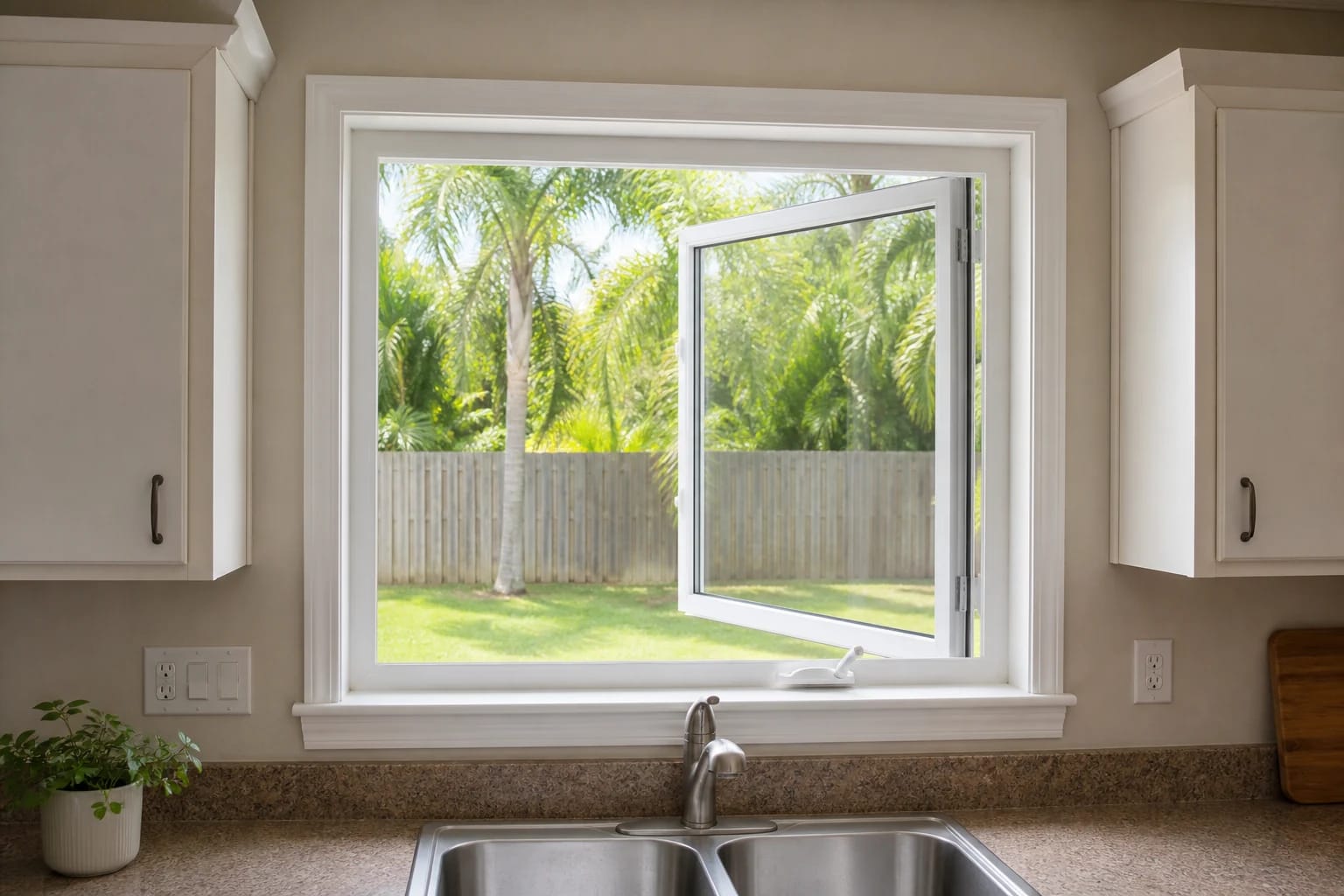
A casement window is hinged at the side and opens outward, usually with a crank. The entire sash can move away from the opening, providing broad ventilation and an unobstructed glass area when closed.
How it works
What makes a casement window different
Because the operating handle sits near the sill, a casement can be easier to use across a kitchen counter than a sash that must be lifted by hand. When the window closes, the sash pulls against its seals around the perimeter.
The outward swing is the key planning issue. Landscaping, paths, roof lines and screen-enclosure framing must leave enough room for the sash to open without creating an obstruction or being crowded by plants.
Mid State Windows handles complete window installation: measuring the real opening, ordering the full unit, removing the old window, setting and sealing the replacement, and completing the related finish work. The company does not provide glass-only, sash, balance or hardware repair.
Purpose
Why homeowners choose casement windows
- Broad opening
- Most of the framed area can open for ventilation rather than only half of the window.
- Easy-to-reach operator
- A sill-mounted crank can be practical where a counter makes lifting a sash awkward.
- Clean glass area
- A single casement sash can provide a clear view without a horizontal meeting rail.
- Paired layouts
- Two casements can flank a fixed window or sit together in a wider opening.
Likely locations
Where this style usually makes sense
These are common residential placements, not a substitute for measuring the wall, checking exterior clearance and seeing how the room is actually used.
- Above a kitchen sink
- The crank can be reached without leaning far enough to lift a conventional sash.
- Narrow vertical openings
- A tall casement makes efficient use of a wall section that is not wide enough for a slider.
- Living areas
- Useful beside a fixed picture window when the room needs both an open view and ventilation.
- Bedrooms
- Can provide a generous operating opening when the exact size and room requirements support it.
See it in place
Casement windows from the room and the yard
Each view keeps the side hinge, outward-opening sash and practical residential scale visible.
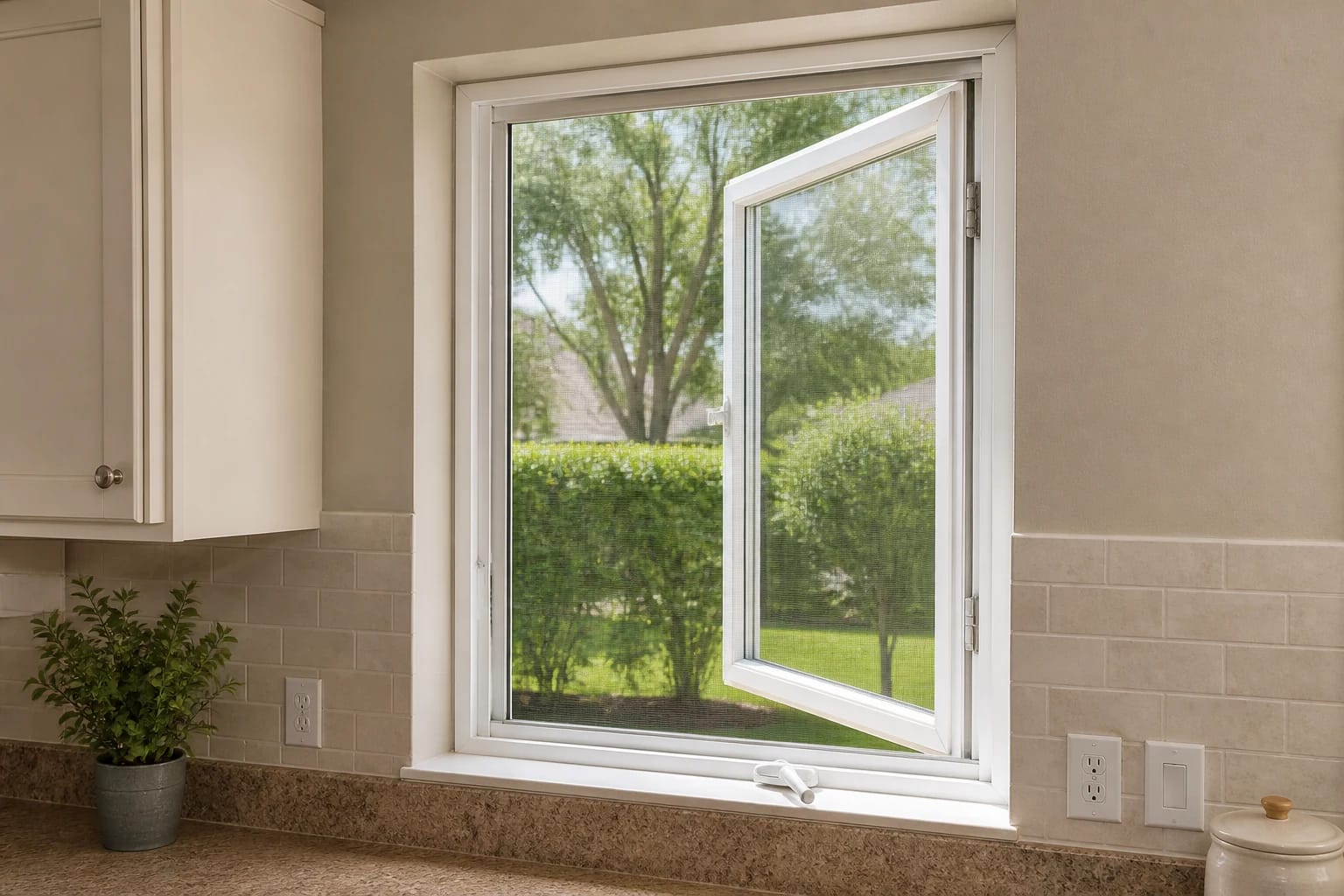
Kitchen casement window opened above a standard sink
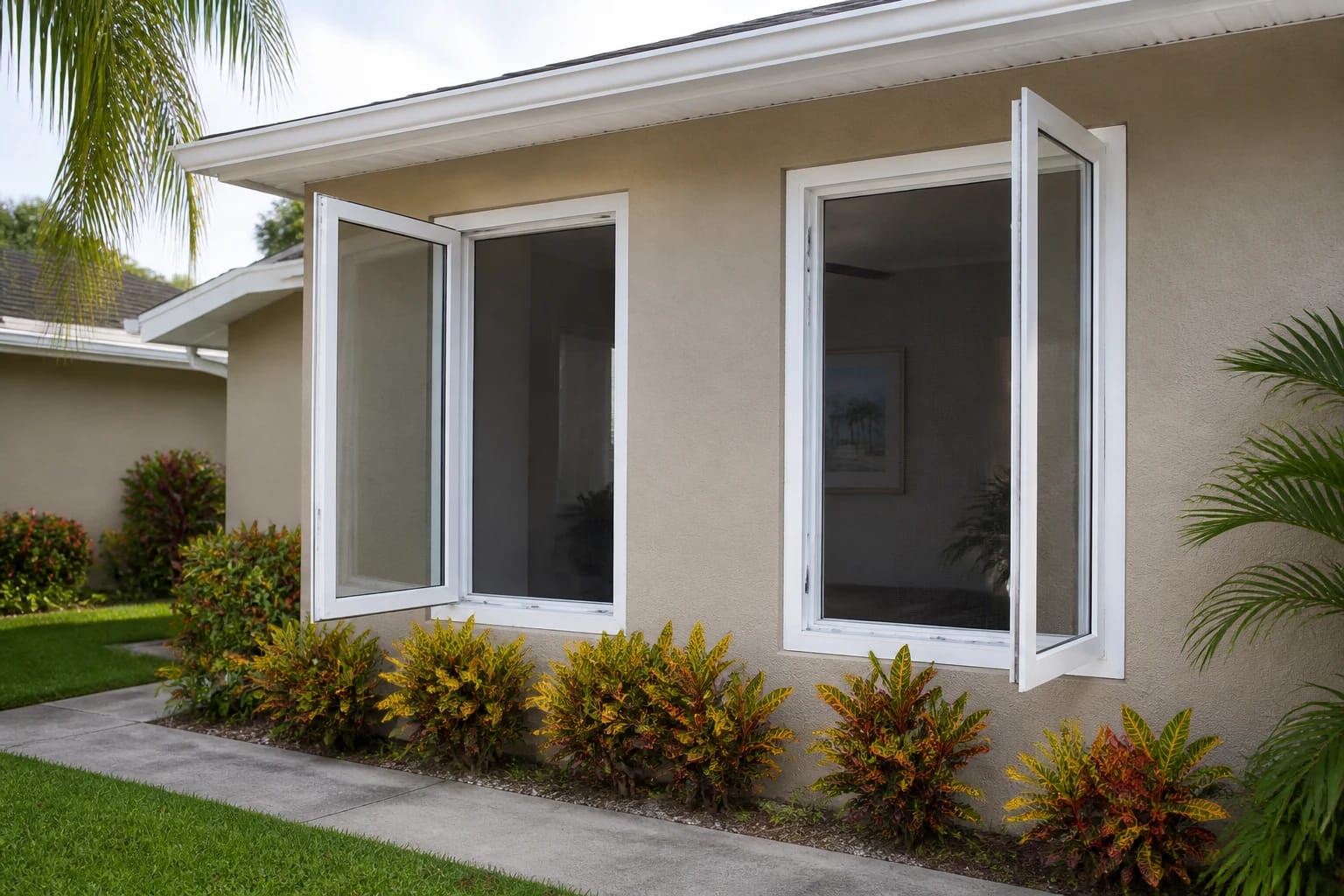
Exterior view of paired casements in a stucco wall
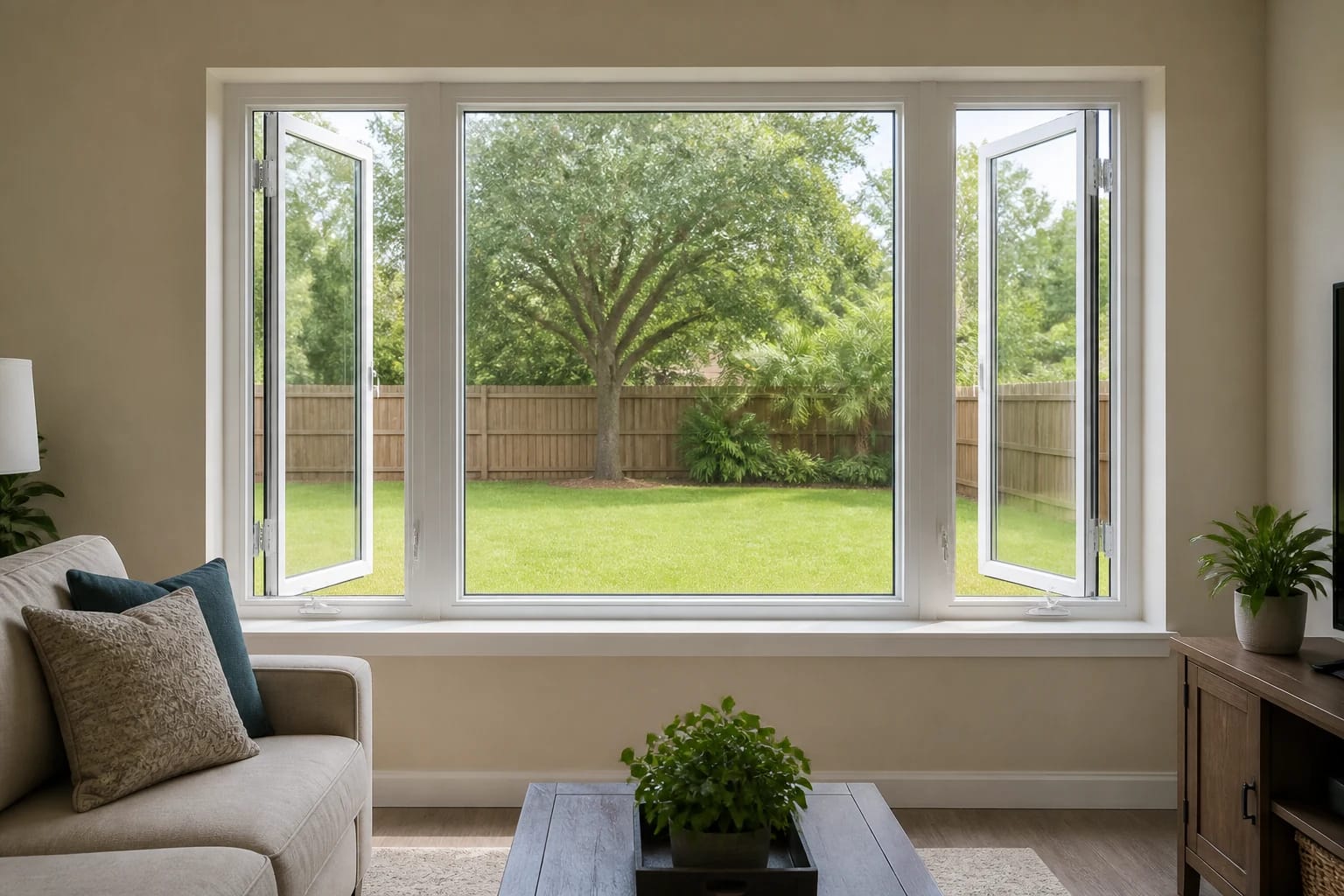
Interior casement beside a fixed living-room window
Slide 1 / 3
Slide 1 of 3: Kitchen casement window opened above a standard sink
Before ordering
Details to review at the opening
- Exterior clearance
- Check paths, shrubs, downspouts, roof overhangs and enclosure members before choosing the hinge direction.
- Hinge direction
- Left- and right-hinged units affect how air enters and how the open sash relates to the yard.
- Operator access
- Faucets, backsplash details, blinds and countertop objects should not interfere with the crank.
- Screen location
- Casement screens normally sit on the room side, so the interior finish and access need to remain practical.
Product features, available sizes, glass packages and performance ratings vary by manufacturer and exact unit. Those specifics should be confirmed for the window quoted for your home. See Mid State Windows' window brands and custom options.
Compare styles
Other window types
Planning a casement window installation?
Tell Mid State Windows which opening you are considering for casement windows. The estimate covers a complete measured replacement installation, not a repair-only visit.