
Window Installation
Geometric windows for arches, gables and distinctive openings
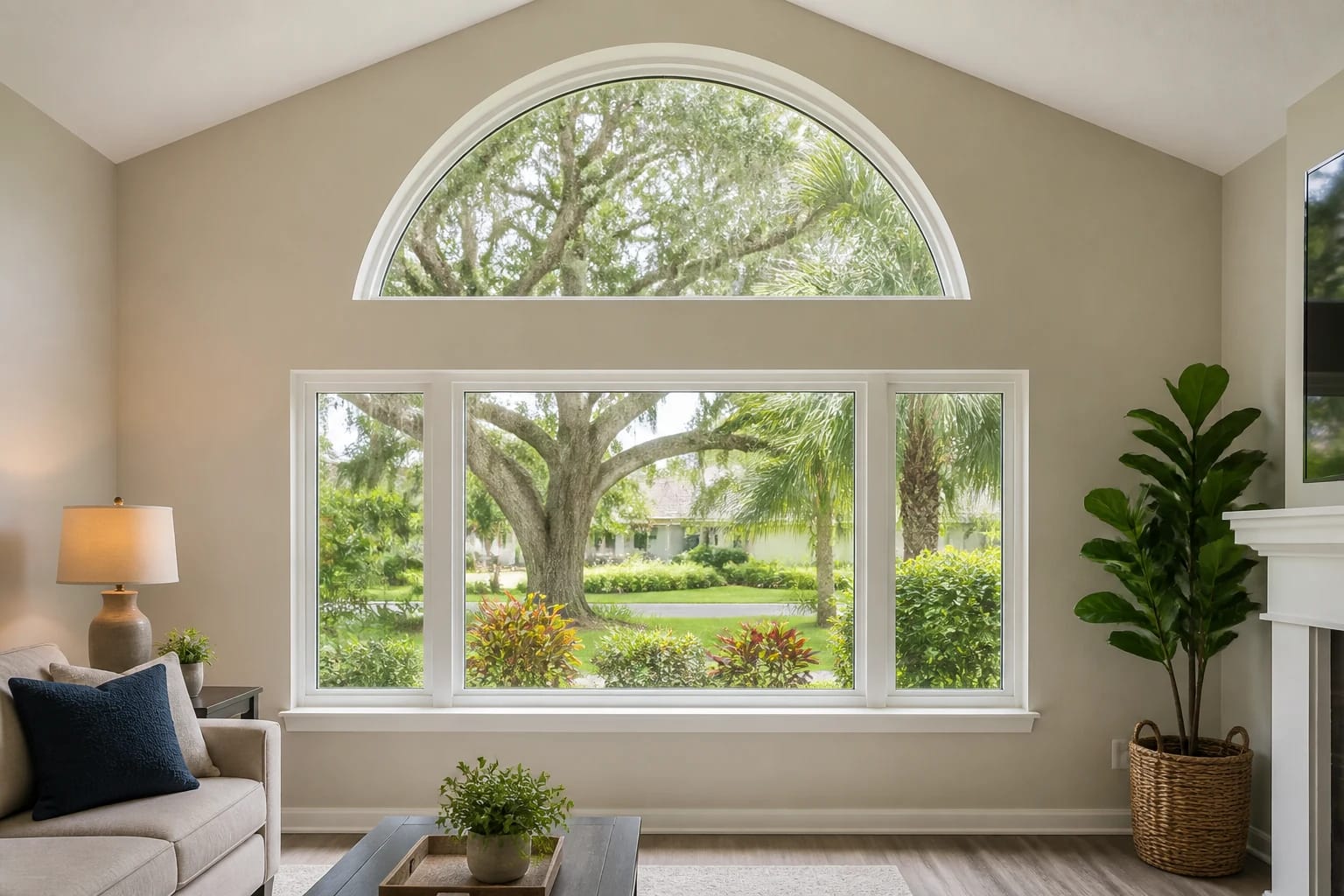
Geometric windows use shapes such as half-rounds, arches, circles, octagons, triangles and trapezoids. Most are fixed glass, serving as a source of daylight or an architectural accent rather than an operating window.
How it works
What makes a geometric window different
A shaped window should look connected to the room and the exterior architecture. It may sit above a rectangular window or door, fill a gable, light a stair landing or occupy a small feature opening on its own.
Accurate templates and measurements matter because the curves and angles must match the opening and surrounding finish work. A geometric unit that is slightly out of proportion is more noticeable than the same difference on a simple rectangle.
Mid State Windows handles complete window installation: measuring the real opening, ordering the full unit, removing the old window, setting and sealing the replacement, and completing the related finish work. The company does not provide glass-only, sash, balance or hardware repair.
Purpose
Why homeowners choose geometric windows
- Architectural accent
- A shaped opening can echo a roof line, entry arch or other detail already present on the home.
- Daylight in difficult walls
- Fixed geometric glass can brighten a gable, stair or high wall without needing reachable hardware.
- Window combinations
- Half-rounds and arches can complete a rectangular group below when frame lines are coordinated.
- Small feature openings
- A circle or octagon can give a bathroom, hall or front elevation a focused point of interest.
Likely locations
Where this style usually makes sense
These are common residential placements, not a substitute for measuring the wall, checking exterior clearance and seeing how the room is actually used.
- Above an entry or window group
- Arched and half-round units can follow the composition below and bring light higher into the room.
- Gable walls
- Triangles and trapezoids can use wall area that a standard rectangle would leave empty.
- Stair landings
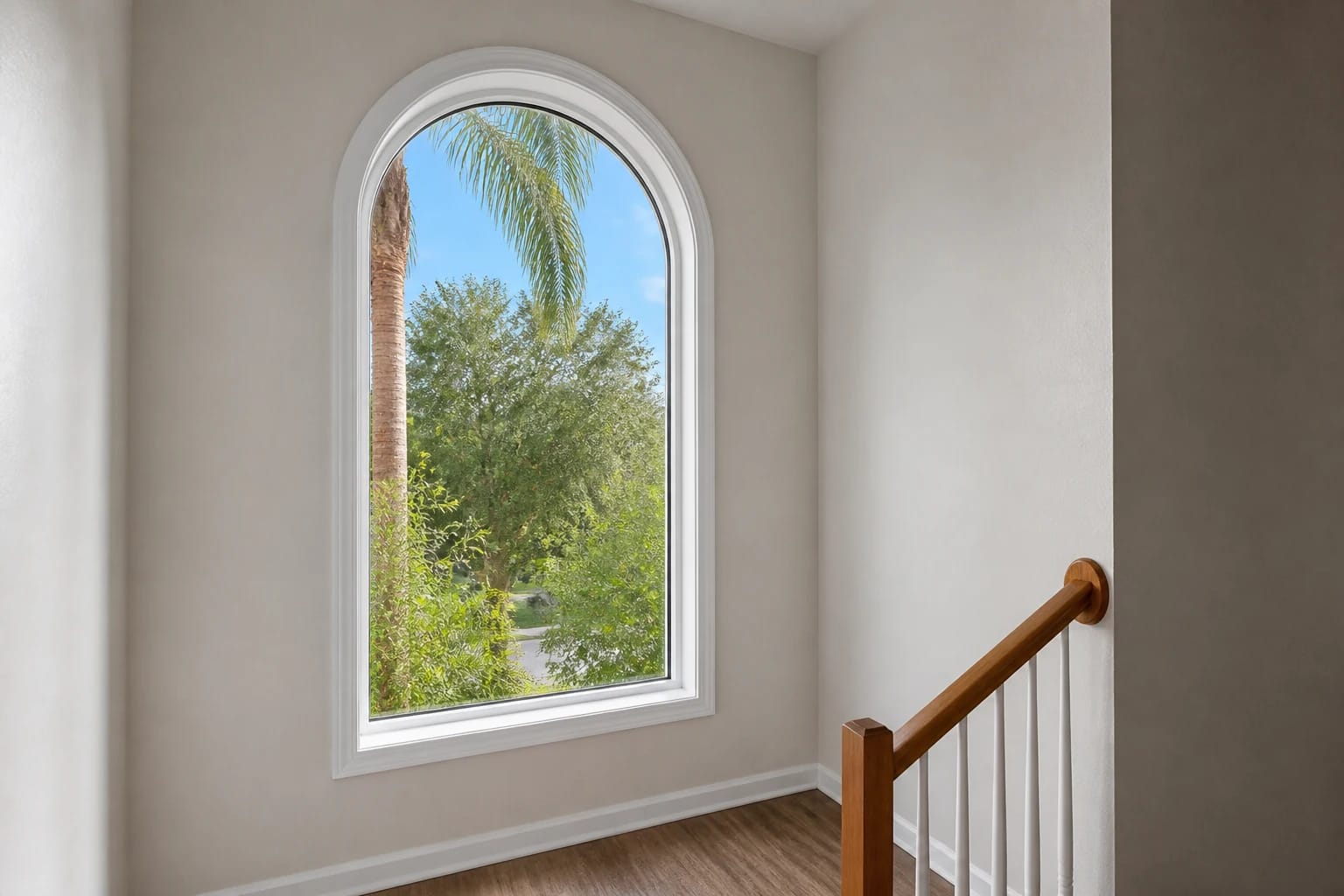
- Fixed shaped glass provides light where an operating handle would be hard to reach.
- Bathrooms and hallways
- Smaller circles or octagons can add daylight while keeping the opening compact.
See it in place
Geometric windows that belong on the house
The gallery mixes arched, round and angled shapes in modest homes where the window supports the architecture instead of overpowering it.
Interior half-round window above a rectangular opening
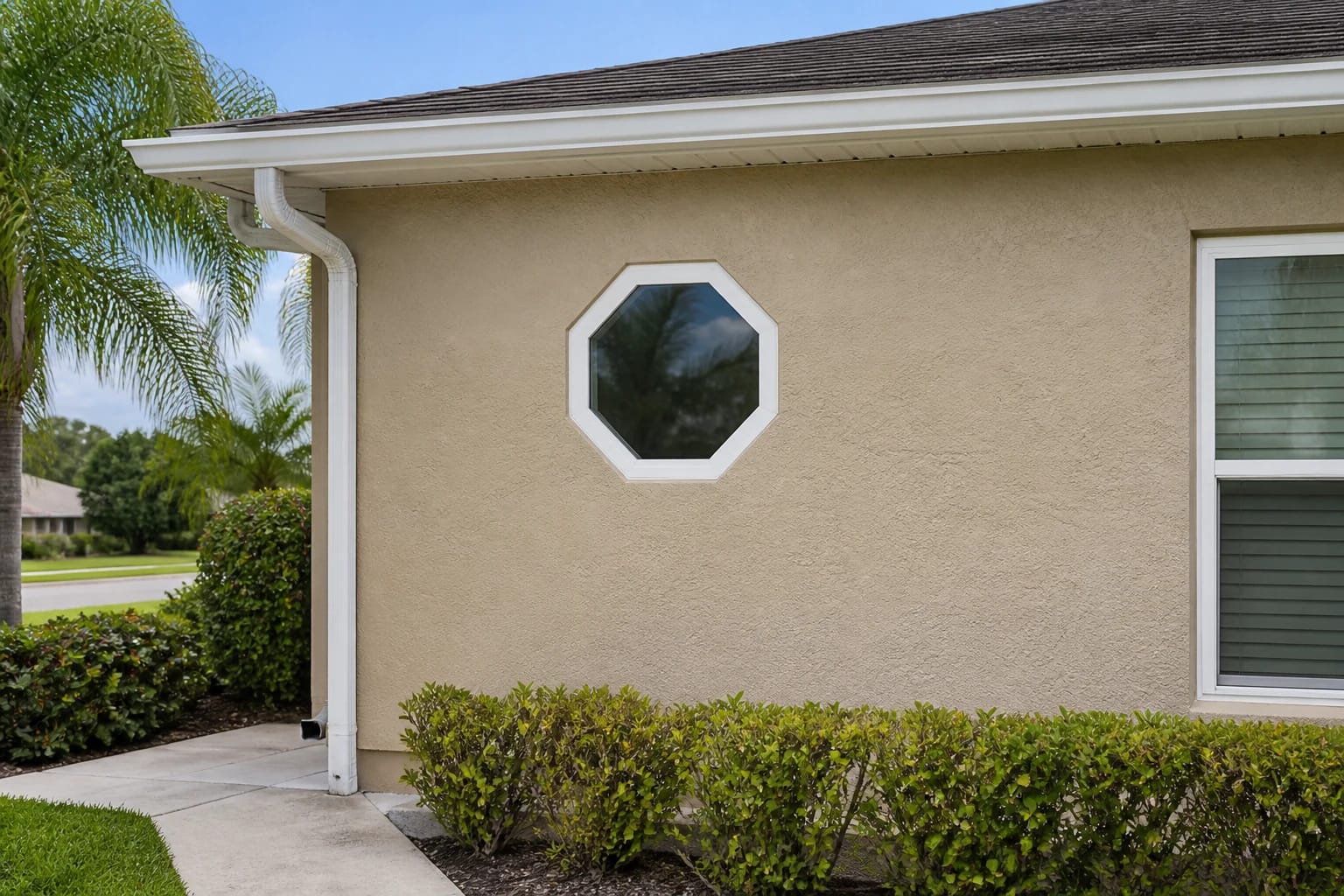
Exterior octagonal accent window in a stucco wall
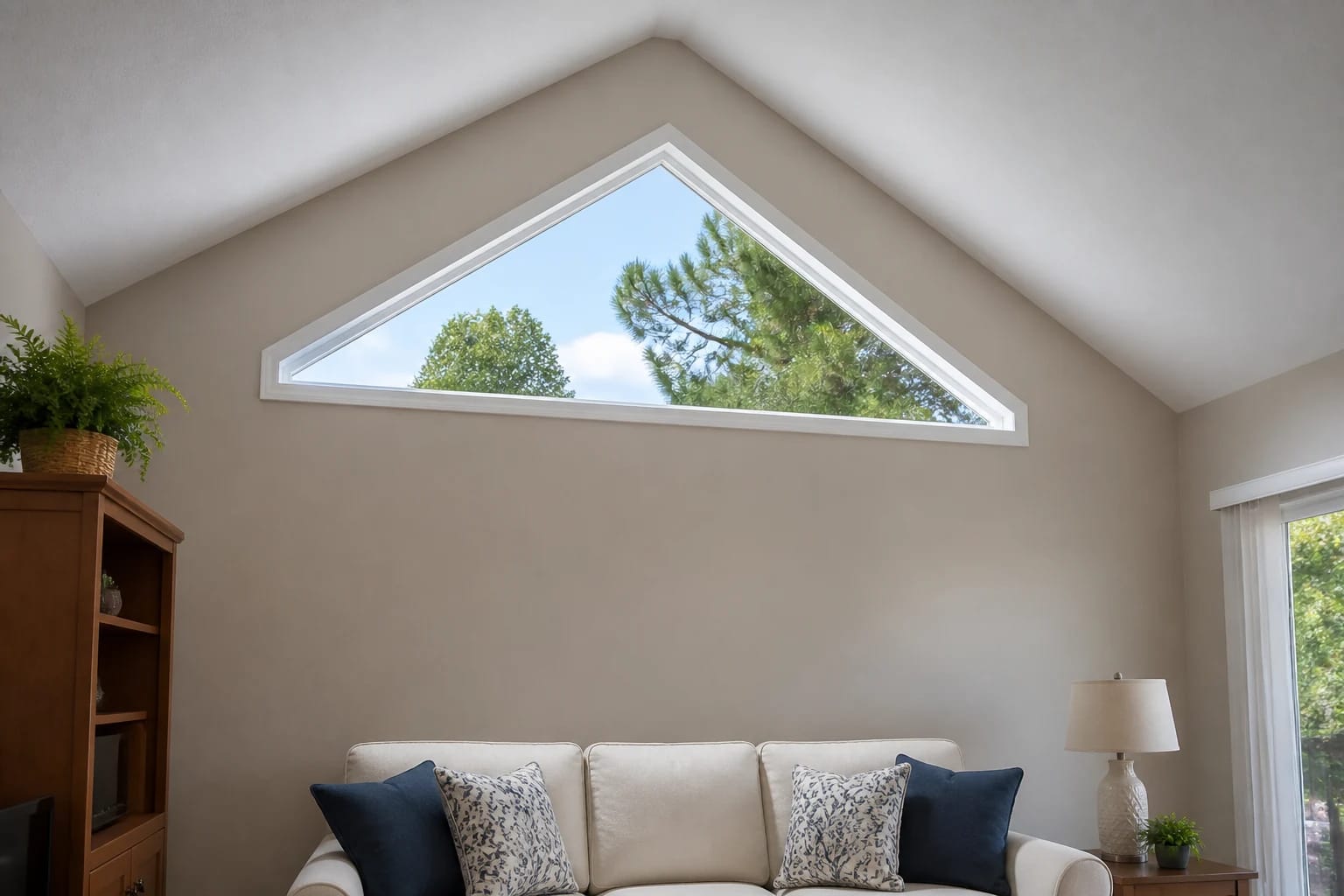
Angled fixed window following a modest gable roof line
Slide 1 / 3
Slide 1 of 3: Interior half-round window above a rectangular opening
Before ordering
Details to review at the opening
- Exact shape
- Radius, angle and straight-leg dimensions must be taken from the real opening rather than assumed from plans.
- Alignment
- When the shape sits over another unit, centerlines and frame widths should visually connect.
- Access and cleaning
- High fixed glass should be planned with realistic interior and exterior cleaning access in mind.
- Exterior finish
- Stucco, siding and trim need clean transitions around curves and angled corners.
Product features, available sizes, glass packages and performance ratings vary by manufacturer and exact unit. Those specifics should be confirmed for the window quoted for your home. See Mid State Windows' window brands and custom options.
Compare styles
Other window types
Planning a geometric window installation?
Tell Mid State Windows which opening you are considering for geometric windows. The estimate covers a complete measured replacement installation, not a repair-only visit.