Installation Guide7 min read
Your Installation Day: What to Expect
How to prepare for window or sliding glass door installation, what happens while the crew works, and what to check before the job is complete.
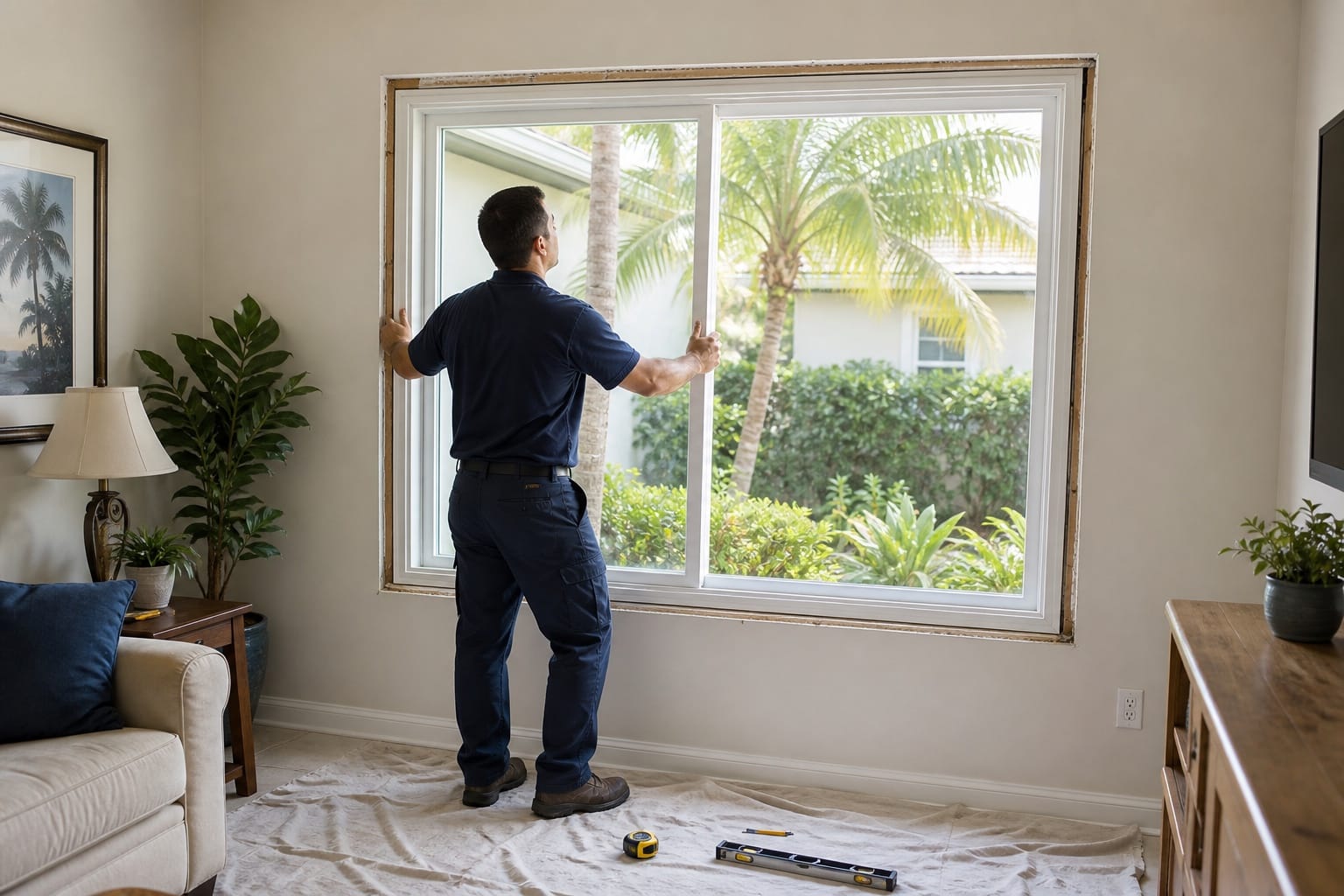
Homeowners usually spend plenty of time choosing the windows or sliding glass door and much less time thinking about the day the old units come out. Then the appointment gets close and practical questions start: How much room does the crew need? Will the house be open? How noisy will it be? What should be checked before everyone leaves?
A complete installation is controlled work, but it is still construction inside your home. Knowing the sequence makes the day easier to plan around and helps you recognize what a careful installation should include.
Before installation day
When the date is scheduled, ask what Mid State Windows needs you to move and what the crew will handle. The answer can change with the size of the opening, the window treatment and how the installers have to reach the work area. Unless you are told otherwise, these preparations keep the crew moving and protect the things around the opening:
- Clear a path from the entry door to each work area and leave several feet of open floor space around every window or sliding door.
- Move fragile objects, lamps and nearby wall decorations that could be affected by vibration.
- Ask whether blinds, curtains, rods or shutters need to come down before the crew arrives.
- Clear patio furniture, planters and anything sitting against the exterior side of the opening. Turn off sprinklers near the work area.
- Keep pets and young children in a closed, comfortable part of the house. An opening may be fully exposed for part of the job.
- Arrange for an adult to provide indoor access and be available for questions and the final walkthrough.
Plan for noise. Removing old frames and fastening new ones involves prying, drilling, cutting and vacuuming. If you work from home, choose a room away from the installation area and expect interruptions.
How the work usually unfolds
Arrival, access and protection
The day begins with a review of the openings, a plan for moving materials through the house and protection for floors and nearby surfaces. The crew stages the new units and tools so work can move in a deliberate order instead of turning the whole house into one large work zone.
The old units come out
Windows are normally handled one opening at a time or in small groups. The sash, glass and old frame are removed without leaving more of the house open than necessary. For a sliding glass door, the panels come out first, followed by the complete frame and track. Stucco, hardened sealant and older fastening methods can make removal slower than it looks.
The exposed opening is checked
Once the old frame is gone, the crew can see the sill, framing or buck that had been hidden. The opening is checked for damage, softness, old water entry and anything else that would keep the new unit from being secured and sealed correctly. If an unexpected condition appears, it should be discussed before the opening is covered again.
The new unit is set and secured
The new frame is positioned, shimmed, checked for level and plumb, and fastened to the opening. That alignment matters. A window has to open, close and lock without binding, and a sliding glass door track has to sit true so the panels roll and meet the lock correctly. The house may not be perfectly square, but the new unit still needs to be.
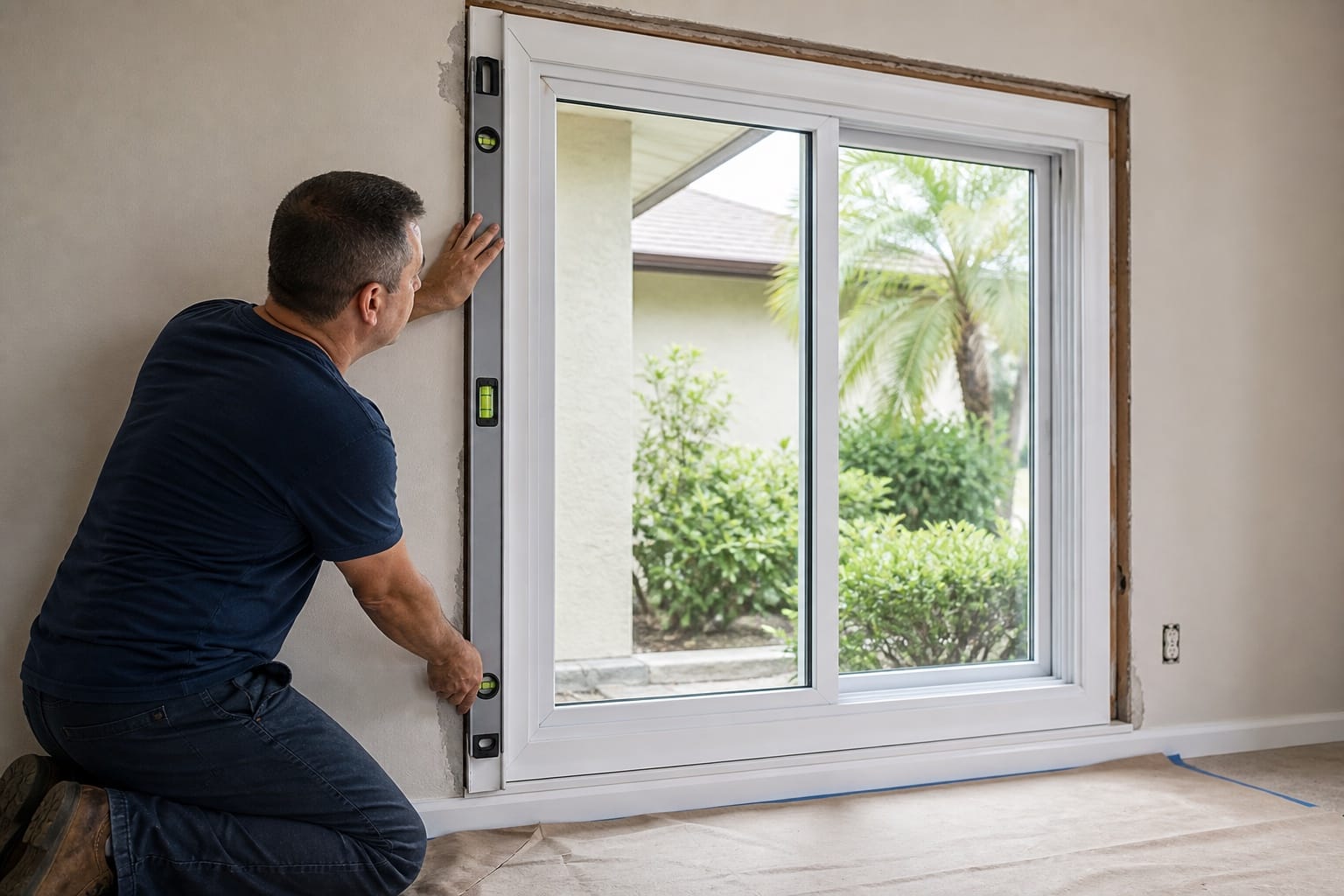
Sealing and finish work complete the opening
After the unit is secured, the perimeter is sealed and the interior and exterior finish work is restored. Depending on the opening, that may include trim, sealant, stucco detail and the paint line around the frame. Sliding glass door thresholds receive particular attention because wind-driven Florida rain can test the sill from several directions.
Cleanup and the walkthrough
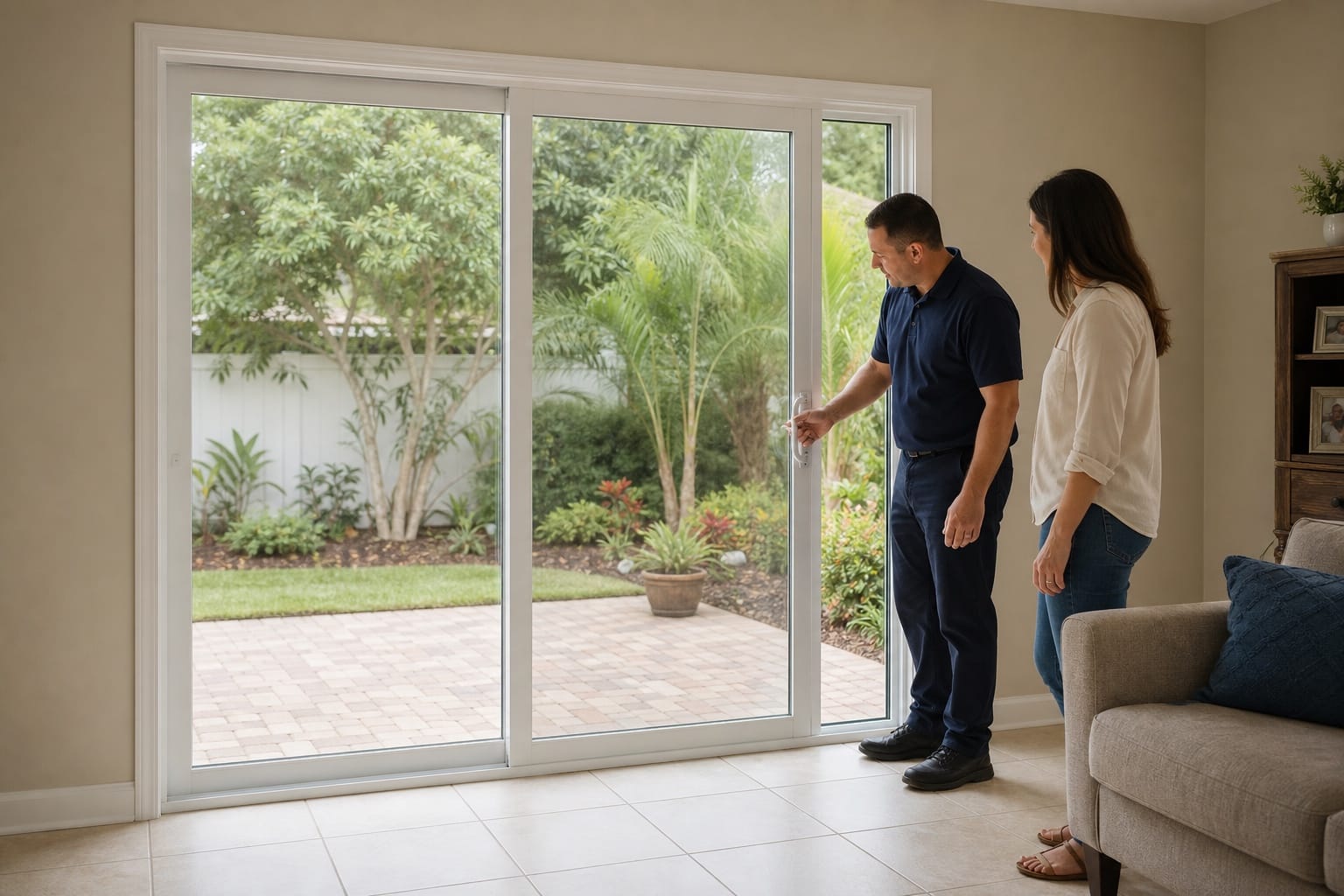
Packaging, old materials and installation debris should be gathered as the work progresses, followed by a final cleanup. Then the new units are operated in front of you. Open and close each window. Roll the sliding door through its full travel. Check the locks, screens and any operating instructions while the installer is still there.
How long should installation take?
There is no reliable one-number answer. A smaller group of straightforward first-floor windows may be completed in a day. A whole-home project, a wide sliding glass door or openings that need extra preparation can take longer. Your written estimate and scheduling conversation should set the expected duration for your specific job.
- The number, size and style of the units being installed
- First-floor versus difficult upper-floor access
- Stucco, trim and the way the original frames were fastened
- Custom shapes, wide doors and pocketing or stacking configurations
- Hidden damage or an opening that needs correction before installation can continue
- Permit and inspection requirements for the project
What to confirm before the crew leaves
- Every window and sliding door opens, closes and locks the way it should.
- Screens are fitted where included and you know how to remove or operate them.
- Interior and exterior finish lines are complete, with no exposed gaps around the frame.
- The work areas are clean and you know how the old units and remaining debris are being removed.
- You have the product, care and warranty documents that apply to the units installed.
- You understand any curing instructions for fresh sealant and when sprinklers or washing can safely resume.
- You know whether a final inspection remains and who will coordinate it.
Do not wait until later to mention a sash that binds, a lock that feels wrong or a sliding panel that does not travel smoothly. The walkthrough is the right time to operate everything yourself and ask questions.
Permits and final inspection
Window and sliding glass door projects commonly require permitting in Central Florida. Mid State Windows handles the permits and inspections required for the installation. If an inspection occurs after installation day, keep the appointment information and make sure the project is properly closed out.
A well-planned day should feel orderly
Installation is noisy and temporarily opens part of the house, but it should not feel uncontrolled. The crew should protect the work area, explain unexpected conditions, set and seal each unit carefully, clean up and leave time for you to operate the finished windows or door. A little preparation beforehand makes that process much easier for everyone.
Written by Mid State Windows, a locally owned window and sliding glass door installation company in Lake Mary, Florida.
All articles